


What you get with MDSS Microfilm Scanning:
Microfilm scanning for 16mm and 35mm roll film formats
High-resolution output (up to 600 DPI) from all standard microfilm gauges
Handles reels in any condition — including aged, yellowed, and degraded film
Searchable PDF and TIFF output with embedded OCR text layer
Custom indexing and file naming to your reference or cataloguing system
Image enhancement for low-contrast, faded, or physically damaged reels
GDPR-compliant throughout with full chain-of-custody documentation
UK-wide collection using secure, tracked transport
ISO-accredited service with specialist microfilm scanning technicians
Completed files delivered via encrypted transfer, USB, or secure cloud portal
Microfilm Scanning from MDSS
Microfilm was the dominant format for long-term document preservation throughout the latter half of the twentieth century. Libraries, local authorities, financial institutions, legal practices, newspaper archives, and land registries all used microfilm extensively — and millions of reels remain in storage across organisations that no longer have the equipment, or the expertise, to access them.
MDSS provides professional microfilm scanning that converts your legacy film archive into high-resolution, fully searchable digital files. We work with 16mm and 35mm roll film across all standard formats, handling fragile, aged, or degraded reels with the care they require.
Every project is managed by specialist scanning technicians with direct experience of microfilm formats. Output is delivered to your specification — resolution, file format, indexing, and naming all confirmed before work begins. No assumptions, no surprises.
Who Uses Microfilm Scanning?
- Local authorities with planning, land, and historical record collections
- Legal practices with archived case file and deeds collections
- Financial institutions with historic transaction and account records
- Libraries and archives with newspaper, journal, or book collections
- NHS and healthcare organisations with patient record archives
- Land registry and property management organisations
- Universities and research institutions with academic archive collections
The Scanning Process
- Collection — Reels are collected from your site in protective containers, logged on departure, and transported via secure tracked vehicle.
- Assessment — We inspect each reel for condition, density, and any areas requiring specialist handling or image enhancement before scanning.
- Scanning — Film is scanned frame by frame using dedicated microfilm scanning equipment at your specified resolution. OCR is applied to produce a searchable text layer.
- Quality Control — Every frame is checked for completeness and clarity. Degraded or low-contrast frames are enhanced before final output is produced.
- Delivery — Completed files are delivered in your chosen format, named and indexed to your reference system. Original reels are returned, stored, or destroyed on request.
Roll Film Scanning (16mm)
16mm microfilm scanning for the most common format used in legal, financial, and public sector document archives.
- Image enhancement applied as standard where film condition requires it
- Handles simplex and duplex 16mm roll film
- Output to searchable PDF, TIFF, or your specified format
- Indexing matched to your file, case, or reference number system
- Compatible with all standard 16mm cartridge and open reel formats
Roll Film Scanning (35mm)
35mm microfilm scanning for engineering, newspaper, and specialist archive collections where the wider gauge was used.
- Resolution selectable up to 600 DPI for detail-critical collections
- Handles standard 35mm roll film in open reel and cartridge formats
- High-resolution output suitable for technical drawings and fine print
- Newspaper archive scanning with page-level or article-level indexing
- Suitable for engineering drawing archives held on 35mm film stock

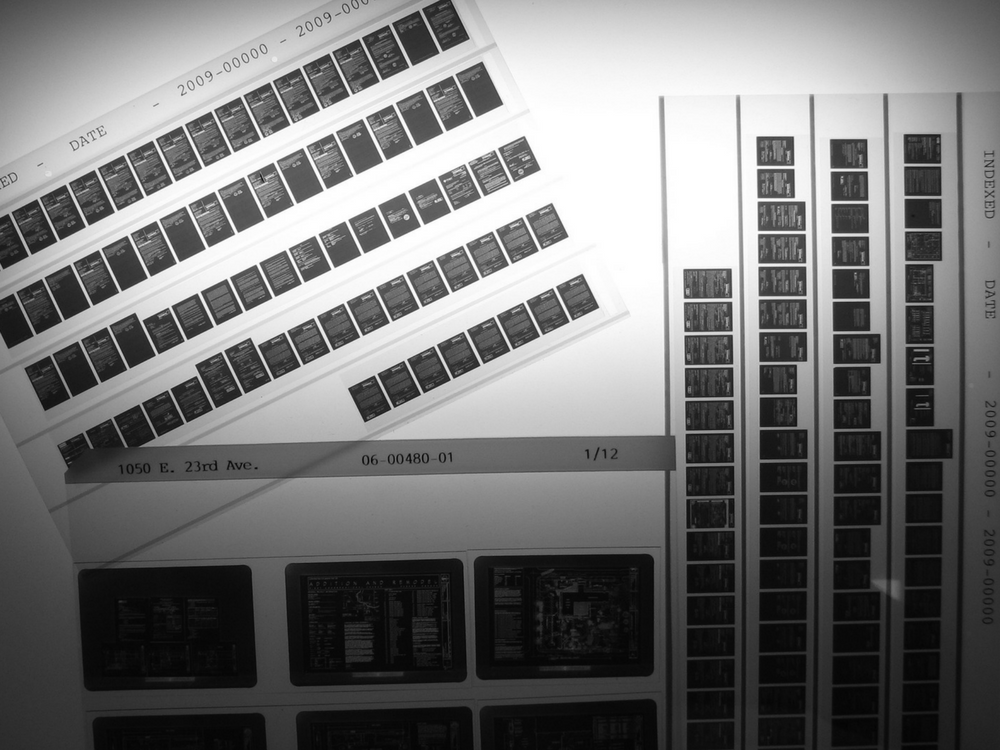
Film Preservation and Enhancement
Image processing and enhancement for microfilm collections where age or physical condition affects output quality.
- Contrast and brightness adjustment for faded or underexposed film
- Scratch and dust removal for physically degraded reels
- Frame-by-frame quality review throughout the scanning process
- Enhancement report identifying reels or frames that required intervention
- Recommendations on original film preservation or disposal on completion
Secure storage, scanning, and shredding — all in one place
Request a QuoteFrequently Asked Questions
We scan 16mm and 35mm roll film in open reel and cartridge formats. If you have a format outside these standard gauges, contact us and we will assess whether it falls within our current capability.
Yes. Aged and degraded film is common in legacy microfilm collections. Our technicians assess each reel before scanning and apply image enhancement where film condition affects output quality. Even significantly aged film can often yield usable digital output with the right processing.
OCR stands for Optical Character Recognition. It processes the scanned images to identify and embed a searchable text layer in your PDF files, allowing you to search by keyword across the entire digitised collection. Most clients request OCR as standard — it transforms a static image archive into a fully searchable resource.
Indexing is agreed with you before the project begins. We can work to your existing reference system, create a new index from document content, or produce a simple sequential numbering scheme if no prior system exists. Completed files are named and organised to the agreed convention before delivery.
Timescales depend on volume, condition, and resolution requirements. A collection of 50–100 reels in reasonable condition typically completes within two to three weeks of collection. We agree a specific timescale with you during project scoping.
Additional Document Scanning Solutions
Bulk Document Scanning
High-volume document scanning, handled from collection to delivery. Secure, GDPR-compliant, and tailored to your indexing requirements — whatever the scale.
Microfiche Scanning
Professional microfiche scanning that converts flat fiche sheets into high-resolution, fully searchable digital files — accessible without readers or specialist equipment.
Large Format Scanning
Large format scanning for engineering drawings, architectural plans, and oversized documents — high-resolution digital output with expert handling and custom indexing.
Aperture Card Scanning
Professional aperture card scanning that converts legacy engineering drawings into high-resolution digital files — accurate, searchable, and ready for modern document systems.
Scan on Demand
Request any stored document and receive a high-resolution digital copy within hours – no physical retrieval, no delay, no disruption to your stored archive.
MDSS Flex
Document storage and scanning without long-term contracts or minimum commitments – MDSS Flex gives you professional records management on a fully flexible basis.
Scanning Knowledge Hub
Scanning Knowledge Hub Everything you need to know about document scanning and digitisation — from large-format drawings and bulk archive conversion, to scan-on-demand access and integrating digital files with your existing systems
MDSS Insights
Practical guides and expert insights on managing, protecting, and disposing of business information. Helping organisations stay compliant while improving document management processes.



We can also help with…

Document Storage
Professional off-site document storage for businesses. Secure, GDPR-compliant, and fully managed with fast retrieval, confidential shredding, and scan-on-demand built in.

Document Shredding
GDPR-compliant confidential shredding for businesses. Secure destruction of sensitive documents with a certificate of destruction issued as standard — one-off or ongoing.
Talk to our team
Whether you need to store a single archive room or manage records across multiple sites, we will give you a straight answer and a clear quote — no obligation, no jargon.
You’re in safe hands