

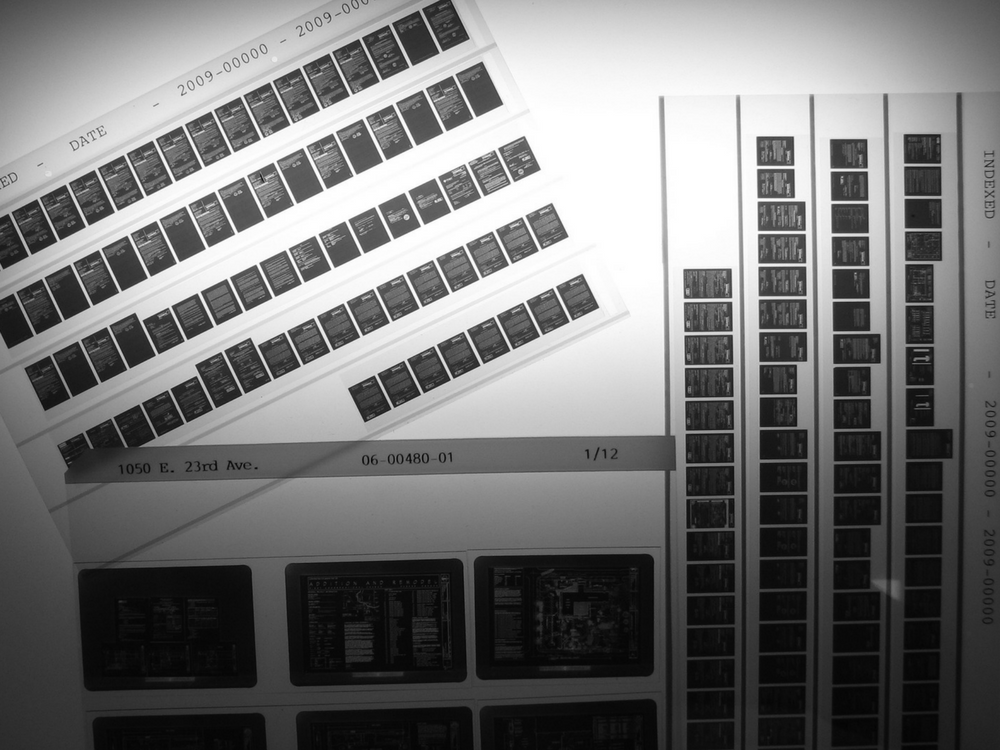
What you get with MDSS Aperture Card Scanning service:
Specialist aperture card scanning for engineering, construction, and manufacturing archives
High-resolution digital output (up to 1200 DPI) from 35mm microfilm inserts
Output to TIFF, PDF, AutoCAD-compatible formats, or your specified file type
Custom indexing built around your existing drawing register or reference system
Handles cards in any condition — aged, damaged, or partially degraded film
Full OCR applied to title block data for searchable drawing metadata
GDPR-compliant handling with full chain-of-custody documentation throughout
UK-wide collection from your site using secure, tracked vehicles
Completed files delivered via encrypted transfer, USB, or secure cloud portal
ISO-accredited service with specialist scanning technicians throughout
Aperture Card Scanning from MDSS
Aperture cards were the standard format for storing engineering drawings, architectural plans, and technical schematics throughout the latter half of the twentieth century. Millions of cards remain in storage across industries — and the equipment needed to view them is increasingly rare, unreliable, and expensive to maintain.
MDSS provides professional aperture card scanning that converts your entire legacy archive into high-resolution digital files. Whether you have hundreds of cards or hundreds of thousands, we manage the project from collection through to delivery of fully indexed, format-matched digital output — without requiring any equipment on your side.
Our scanning technicians work with 35mm aperture cards across all formats and conditions. Aged, degraded, or partially damaged film is not a barrier — we apply image enhancement techniques where necessary to recover the best possible output from every card.
Who Uses Aperture Card Scanning?
Aperture card archives are most commonly held by:
- Engineering and manufacturing companies with legacy drawing libraries
- Construction and property management firms with historic site records
- Local authorities and utilities with infrastructure documentation
- Defence and aerospace organisations with equipment and installation schematics
- Universities and research institutions with technical archive collections
If your organisation holds a legacy drawing archive on aperture cards and needs to make those records accessible, searchable, and safe for the long term, MDSS can manage the entire conversion process.
The Scanning Process
- Collection — Cards are collected from your site in protective containers using secure, tracked vehicles. Every card is logged before departure.
- Assessment — We inspect the collection for condition, assess any cards requiring specialist handling, and confirm output specifications with you.
- Scanning — Each card is scanned at high resolution using dedicated aperture card scanning equipment. Title block data is captured and OCR-processed for searchability.
- Quality Control — Every image is reviewed for sharpness, completeness, and accuracy against the original. Enhancement is applied where film degradation requires it.
- Delivery — Completed files are delivered in your specified format, named and indexed to your drawing register. Original cards are returned, stored, or destroyed on request.
Drawing Register Integration
Completed digital files indexed and named to match your existing drawing register — no manual renaming required after delivery.
- Drawing register supplied in CSV or Excel if required for system import
- Files named to your drawing number, revision, and title convention
- Delivered in a folder structure that mirrors your existing register
- Metadata captured from title blocks and embedded in file properties
- Compatible with AutoCAD, Revit, SharePoint, and most DMS platforms
Image Enhancement
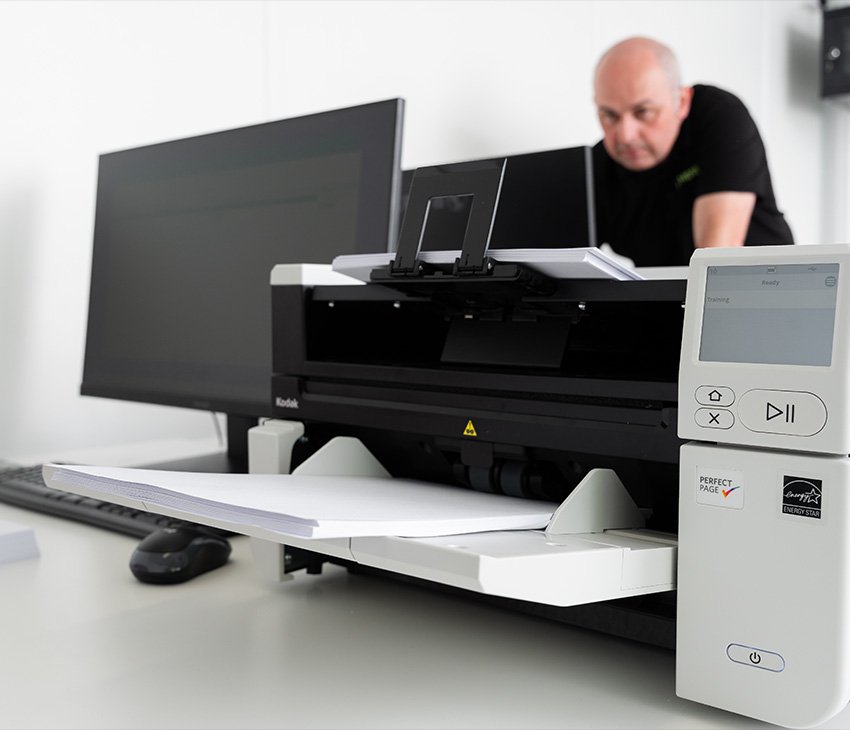
Specialist processing to recover the maximum usable detail from aged, faded, or degraded aperture card film.
- Enhancement report provided identifying cards that required intervention
- Contrast and brightness adjustment for low-density or overexposed film
- Scratch and dust removal to produce clean output from physically damaged cards
- Resolution upscaling for cards where original film quality is marginal
- Every enhanced image reviewed by a specialist before delivery
Format Conversion
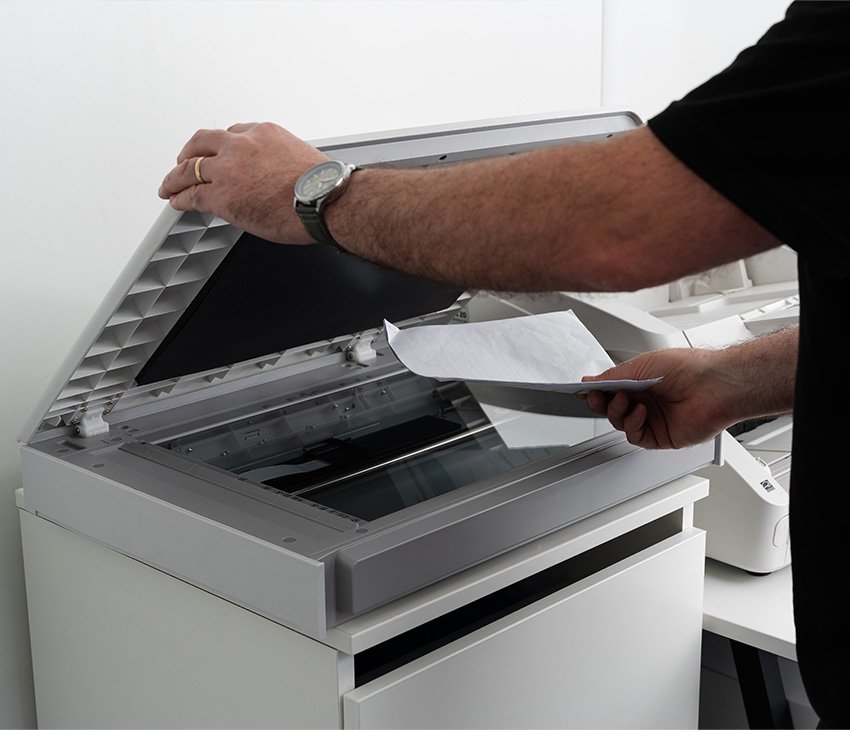
Output delivered in the format your downstream systems require — whether that is standard image formats or CAD-ready files.
- PDF and PDF/A for searchable, long-term storage
- TIFF (uncompressed and compressed) for archival and DMS use
- File size optimisation available for large collections requiring cloud storage
- DWF and compatible raster formats for CAD environment integration
- Multiple formats produced from a single scan run if required
Secure storage, scanning, and shredding — all in one place
Request a QuoteFrequently Asked Questions
An aperture card is a standard 80-column punched card with a rectangular hole cut into it, into which a 35mm microfilm frame is mounted. They were widely used from the 1950s onwards to store engineering drawings, technical schematics, and architectural plans in a compact, retrievable format.
Yes. Aged or degraded film is common in legacy aperture card collections and our technicians are experienced in recovering usable output from cards that have yellowed, faded, or suffered physical damage. We assess condition before the project begins and advise on likely output quality.
Standard output is 400 DPI, which produces high-quality images suitable for most engineering and construction workflows. Higher resolutions up to 1200 DPI are available for collections where fine detail, small text, or tolerances on technical drawings require it.
Yes. We can deliver files in formats compatible with AutoCAD and other major CAD platforms. If you require a specific format for your software environment, confirm this before the project begins and we will ensure output matches your requirements.
Original cards can be returned to you, placed into our secure storage facility, or confidentially destroyed with a certificate of destruction. Organisations in regulated industries often retain originals for a defined period following digitisation before authorising destruction.
Additional Document Scanning Solutions
Bulk Document Scanning
High-volume document scanning, handled from collection to delivery. Secure, GDPR-compliant, and tailored to your indexing requirements — whatever the scale.
Microfilm Scanning
Professional microfilm scanning that converts 16mm and 35mm rolls into high-resolution digital files — fully searchable, indexed, and accessible without specialist equipment.
Microfiche Scanning
Professional microfiche scanning that converts flat fiche sheets into high-resolution, fully searchable digital files — accessible without readers or specialist equipment.
Large Format Scanning
Large format scanning for engineering drawings, architectural plans, and oversized documents — high-resolution digital output with expert handling and custom indexing.
Scan on Demand
Request any stored document and receive a high-resolution digital copy within hours – no physical retrieval, no delay, no disruption to your stored archive.
MDSS Flex
Document storage and scanning without long-term contracts or minimum commitments – MDSS Flex gives you professional records management on a fully flexible basis.
Scanning Knowledge Hub
Scanning Knowledge Hub Everything you need to know about document scanning and digitisation — from large-format drawings and bulk archive conversion, to scan-on-demand access and integrating digital files with your existing systems
MDSS Insights
Practical guides and expert insights on managing, protecting, and disposing of business information. Helping organisations stay compliant while improving document management processes.
We can also help with…

Document Storage
Professional off-site document storage for businesses. Secure, GDPR-compliant, and fully managed with fast retrieval, confidential shredding, and scan-on-demand built in.

Document Shredding
GDPR-compliant confidential shredding for businesses. Secure destruction of sensitive documents with a certificate of destruction issued as standard — one-off or ongoing.
Talk to our team
Whether you need to store a single archive room or manage records across multiple sites, we will give you a straight answer and a clear quote — no obligation, no jargon.
You’re in safe hands